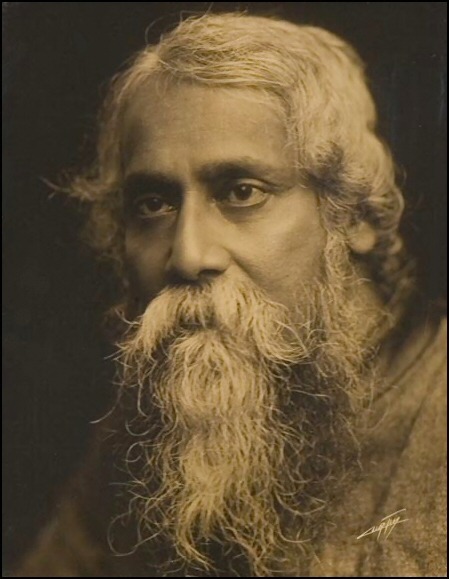
Satyajit Ray is rated by many as one of the five great filmmakers in the history of World Cinema. The following biography attempts a brief sketch of the life and works of the Maestro.
 He was the grandson of Upendrakishore Roychoudhury, the Bengali Scientist and Children’s Novelist; and the son of Sukumar Ray, the legendary limerick artist. He was a typographer with at least two internationally acclaimed type faces to credit, a graphic artist, an author, a music creator and above all, a filmmaker. He was Satyajit Ray; a name respected and revered by movie enthusiasts the world over.
Ray was born on May 2, 1922 to Sukumar and Suprabha Ray in the erstwhile Calcutta, now Kolkata. His initial years were not very remarkable; having lost his father at the age of two, he was brought up by his mother and his uncles. However, his interest in music and the Cinema was evident even then; he learned to read music and attended concerts, while ‘bioscopes’, as Cinema was then known, remained a perennial favourite.
 After graduating from Presidency College in Kolkata he went on to study the fine arts in Shantiniketan, the open air university founded by Rabindranath Tagore, the Nobel laureate poet and philanthropist. More inclined toward the visual media of the celluloid, Ray spent most of his time in Shantiniketan poring over books on films and filmmaking. In 1943, Ray decided to cut short his education and joined the British advertising agency D J Keymer as a visualiser. It was here that the idea of being a filmmaker slowly started taking root in his mind. In 1949, when the French stalwart Jean Renoir visited Calcutta to shoot his film "The River", Ray sought an appointment with him, It is said that Renoir was so impressed with the young man that he encouraged Ray to take up filmmaking as a profession.
In 1950, Ray was sent to London on a six-month stint by his employer, and he took the opportunity to quench his ever-unsatisfied thirst for the Cinema. During that six-month period he saw over a hundred films and was heavily influence by Vittorio De Sica’s "The Bicycle Thief". As he later commented in one of his books, "All through my stay in London, the lessons of Bicycle Thieves and neo-realist cinema stayed with me". In retrospect, these six months perhaps form the core of the conviction that prompted him to move ahead with what was still experimental cinema in those days – he was contemplating shooting his first film "Pather Panchali" with an unknown cast and on actual locations, an idea that did not find much favour with friends.
There is an interesting story behind Ray’s making of "Pather Panchali". In 1944, D K Gupta, a senior colleague at D J Keymer, started the Signet Press and requested Ray to illustrate the abridged version of a novel by Bibhuti Bhushan Bandyopadhyay and also commented that the book might be made into a fine film. Until then, Ray had not indulged much in bengali literature. But as his illustrations progressed, he came to realize that this was perhaps the story that he was looking for to make his directorial debut. A decade later, "Pather Panchali" or "The Song of the Road" was made, won the Grand Prix at the Cannes Film Festival, and had a 13-week run at the Calcutta theatres.
Soon after completing "Pather Panchali", Ray resigned his job at D J Keymer to pursue a full-fledged career in filmmaking. By 1959, Ray had completed making "Aparajito (1956)" or The Unvanquished and "Apur Sansar (1959)" or The World of Apu - the sequels to "Pather Panchali". The three films together traced the life of the protagonist Apu from childhood to adulthood. "Aparajito" went on to bag the prestigious 'Lionne d'Ore' at the Venice Film Festival.
Unlike his contemporaries, Ray exhibited very little bias towards genre. While "Pather Panchali" and its sequels painted a fluid story of a single life, "Kanchenjunga" (1962), his first colour feature, wove a network around the lives of a patriarch, his daughters, and the other men in their lives, over the period of a single day. In "Shatranj Ke Khiladi" (1977) or "The Chess Players" , Ray made a period drama set against the backdrop of the British annexation of the Indian kingdom of Oudh, while in Films like "Goopy Gyne Bagha Byne" (1968) and "Hirak Rajar Deshe" (1980) there was a clear attempt to ridicule political lethargy and corruption through seemingly Children’s Cinema.
In 1978, Ray was declared to be one of three all time best directors by the Berlin Film Festival organising committee.
Apart from being a master director, Satyajit Ray was also a talented music director. In fact, he had written the score for almost all of his films, aside from writing the screenplay, doing the theme illustrations and directing.
 In 1961, Satyajit Ray revived "Sandesh", a children’s literary magazine founded by his grandfather and continued by his father till his untimely and sudden death. The magazine continues to be published and widely read even today, with Ray’s son Sandip Ray taking over the mantle as Managing Editor. In 1968, Ray had been approached by the editor of a widely circulated Bengali literary magazine to contribute a novel for its annual issue. Wielding the pen with as much ease as with the camera, Ray created two immortal characters in two different genres – Feluda, the detective and Professor Shonku, the genius scientist. The adventures of Feluda gained such fame in the Bengali literary circles that Ray went on to make two full length films – "Shonar Kella" (1974) and "Jai Baba Felunath" (1978) based on the master detective. His Professor Shonku stories, too, found great favour with fans of Bengali teen science fiction. As a filmmaker and as an author, Ray had diverse interests, and science fiction was not the least of them. While making a Sci-fi film in India was nearly impossible owing to financial and technical constraints; Ray had been approached to make a full length Hollywood feature titled "Alien" (not to be confused with the Sigourney Weaver claim-to-fame classic), but the project fizzled out due to differences of opinion between the director and the producers.
In the eighties, Ray suffered two major heart attacks and had to refrain from filmmaking for nearly five years. In 1988, he resurfaced with "Ganashatru", an Indian rendition of Ibsen’s "Enemy of the People" and by 1990 had made two more films, the more notable being "Agantuk" (1991) or The Stranger , which went on to become one of the top-ten earners in Paris that year.
In 1992, Ray was awarded the Academy Award for Lifetime Achievement in recognition of his rare mastery of the art of motion pictures and for his profound humanitarian outlook. Unfortunately, Ray had suffered another heart attack and was confined to the hospital bed when the award was announced. The academy award committee flew down to Calcutta to hand over the coveted statuette to him.
On April 23, 1992, Satyajit Ray, the "Last Bengali Rennaissance Man", died at a Calcutta nursing home. The achievement of this versatile filmmaker is perhaps best explained in the words of the veteran Akira Kurosawa "The quiet but deep observation, understanding and love of the human race, which are characteristic of all his films, have impressed me greatly. ...I feel that he is a "giant" of the movie industry."
Filmography:
1955 Pather Panchali (The Song of the Road)
1956 Aparajito (The Unvanquished)
1957 Parash Pathar (The philosopher’s Stone)
1958 Jalsaghar (The Music Room)
1959 Apur Sansar (The World of Apu)
1960 Devi (The Goddess)
1961 Teen Kanya (Three Daughters)
1962 Kanchenjungha
1962 Abhijan (The Expedetion)
1963 Mahanagar (The Big City)
1964 Charulata (The Lonely Wife)
1965 Kapurush-O-Mahapurush (The Coward and The Saint)
1966 Nayak (Nayak: The Hero)
1967 Chiriakhana (The Zoo)
1968 Goopy Gyne Bagha Byne
1969 Aranyer Din Ratri (Days and Nights in the Forest)
1970 Pratidwandi (The Adversary)
1971 Seemabaddha (Company Limited)
1973 Ashani Sanket (Distant Thunder)
1974 Sonar Kella (The Golden Fortress)
1975 Jana Aranya (The Middleman)
1977 Shatranj Ke Khilari (The Chess Players)
1978 Joi Baba Felunath (The Elephant God)
1980 Pikoor Diary (Pikoo’s Day)
1980 Hirak Rajar Deshe (The Kingdom of Diamonds)
1981 Sadgati (Deliverance)
1984 Ghare Baire (The Home and The World)
1989 Ganashatru (An enemy of the people))
1990 Shakha Proshakha (The Branches of The Tree)
1991 Agantuk (The Stranger)
Ray was born on May 2, 1922 to Sukumar and Suprabha Ray in the erstwhile Calcutta, now Kolkata. His initial years were not very remarkable; having lost his father at the age of two, he was brought up by his mother and his uncles. However, his interest in music and the Cinema was evident even then; he learned to read music and attended concerts, while ‘bioscopes’, as Cinema was then known, remained a perennial favourite.
 After graduating from Presidency College in Kolkata he went on to study the fine arts in Shantiniketan, the open air university founded by Rabindranath Tagore, the Nobel laureate poet and philanthropist. More inclined toward the visual media of the celluloid, Ray spent most of his time in Shantiniketan poring over books on films and filmmaking. In 1943, Ray decided to cut short his education and joined the British advertising agency D J Keymer as a visualiser. It was here that the idea of being a filmmaker slowly started taking root in his mind. In 1949, when the French stalwart Jean Renoir visited Calcutta to shoot his film "The River", Ray sought an appointment with him, It is said that Renoir was so impressed with the young man that he encouraged Ray to take up filmmaking as a profession.
In 1950, Ray was sent to London on a six-month stint by his employer, and he took the opportunity to quench his ever-unsatisfied thirst for the Cinema. During that six-month period he saw over a hundred films and was heavily influence by Vittorio De Sica’s "The Bicycle Thief". As he later commented in one of his books, "All through my stay in London, the lessons of Bicycle Thieves and neo-realist cinema stayed with me". In retrospect, these six months perhaps form the core of the conviction that prompted him to move ahead with what was still experimental cinema in those days – he was contemplating shooting his first film "Pather Panchali" with an unknown cast and on actual locations, an idea that did not find much favour with friends.
There is an interesting story behind Ray’s making of "Pather Panchali". In 1944, D K Gupta, a senior colleague at D J Keymer, started the Signet Press and requested Ray to illustrate the abridged version of a novel by Bibhuti Bhushan Bandyopadhyay and also commented that the book might be made into a fine film. Until then, Ray had not indulged much in bengali literature. But as his illustrations progressed, he came to realize that this was perhaps the story that he was looking for to make his directorial debut. A decade later, "Pather Panchali" or "The Song of the Road" was made, won the Grand Prix at the Cannes Film Festival, and had a 13-week run at the Calcutta theatres.
Soon after completing "Pather Panchali", Ray resigned his job at D J Keymer to pursue a full-fledged career in filmmaking. By 1959, Ray had completed making "Aparajito (1956)" or The Unvanquished and "Apur Sansar (1959)" or The World of Apu - the sequels to "Pather Panchali". The three films together traced the life of the protagonist Apu from childhood to adulthood. "Aparajito" went on to bag the prestigious 'Lionne d'Ore' at the Venice Film Festival.
Unlike his contemporaries, Ray exhibited very little bias towards genre. While "Pather Panchali" and its sequels painted a fluid story of a single life, "Kanchenjunga" (1962), his first colour feature, wove a network around the lives of a patriarch, his daughters, and the other men in their lives, over the period of a single day. In "Shatranj Ke Khiladi" (1977) or "The Chess Players" , Ray made a period drama set against the backdrop of the British annexation of the Indian kingdom of Oudh, while in Films like "Goopy Gyne Bagha Byne" (1968) and "Hirak Rajar Deshe" (1980) there was a clear attempt to ridicule political lethargy and corruption through seemingly Children’s Cinema.
In 1978, Ray was declared to be one of three all time best directors by the Berlin Film Festival organising committee.
Apart from being a master director, Satyajit Ray was also a talented music director. In fact, he had written the score for almost all of his films, aside from writing the screenplay, doing the theme illustrations and directing.
 In 1961, Satyajit Ray revived "Sandesh", a children’s literary magazine founded by his grandfather and continued by his father till his untimely and sudden death. The magazine continues to be published and widely read even today, with Ray’s son Sandip Ray taking over the mantle as Managing Editor. In 1968, Ray had been approached by the editor of a widely circulated Bengali literary magazine to contribute a novel for its annual issue. Wielding the pen with as much ease as with the camera, Ray created two immortal characters in two different genres – Feluda, the detective and Professor Shonku, the genius scientist. The adventures of Feluda gained such fame in the Bengali literary circles that Ray went on to make two full length films – "Shonar Kella" (1974) and "Jai Baba Felunath" (1978) based on the master detective. His Professor Shonku stories, too, found great favour with fans of Bengali teen science fiction. As a filmmaker and as an author, Ray had diverse interests, and science fiction was not the least of them. While making a Sci-fi film in India was nearly impossible owing to financial and technical constraints; Ray had been approached to make a full length Hollywood feature titled "Alien" (not to be confused with the Sigourney Weaver claim-to-fame classic), but the project fizzled out due to differences of opinion between the director and the producers.
In the eighties, Ray suffered two major heart attacks and had to refrain from filmmaking for nearly five years. In 1988, he resurfaced with "Ganashatru", an Indian rendition of Ibsen’s "Enemy of the People" and by 1990 had made two more films, the more notable being "Agantuk" (1991) or The Stranger , which went on to become one of the top-ten earners in Paris that year.
In 1992, Ray was awarded the Academy Award for Lifetime Achievement in recognition of his rare mastery of the art of motion pictures and for his profound humanitarian outlook. Unfortunately, Ray had suffered another heart attack and was confined to the hospital bed when the award was announced. The academy award committee flew down to Calcutta to hand over the coveted statuette to him.
On April 23, 1992, Satyajit Ray, the "Last Bengali Rennaissance Man", died at a Calcutta nursing home. The achievement of this versatile filmmaker is perhaps best explained in the words of the veteran Akira Kurosawa "The quiet but deep observation, understanding and love of the human race, which are characteristic of all his films, have impressed me greatly. ...I feel that he is a "giant" of the movie industry."
Filmography:
1955 Pather Panchali (The Song of the Road)
1956 Aparajito (The Unvanquished)
1957 Parash Pathar (The philosopher’s Stone)
1958 Jalsaghar (The Music Room)
1959 Apur Sansar (The World of Apu)
1960 Devi (The Goddess)
1961 Teen Kanya (Three Daughters)
1962 Kanchenjungha
1962 Abhijan (The Expedetion)
1963 Mahanagar (The Big City)
1964 Charulata (The Lonely Wife)
1965 Kapurush-O-Mahapurush (The Coward and The Saint)
1966 Nayak (Nayak: The Hero)
1967 Chiriakhana (The Zoo)
1968 Goopy Gyne Bagha Byne
1969 Aranyer Din Ratri (Days and Nights in the Forest)
1970 Pratidwandi (The Adversary)
1971 Seemabaddha (Company Limited)
1973 Ashani Sanket (Distant Thunder)
1974 Sonar Kella (The Golden Fortress)
1975 Jana Aranya (The Middleman)
1977 Shatranj Ke Khilari (The Chess Players)
1978 Joi Baba Felunath (The Elephant God)
1980 Pikoor Diary (Pikoo’s Day)
1980 Hirak Rajar Deshe (The Kingdom of Diamonds)
1981 Sadgati (Deliverance)
1984 Ghare Baire (The Home and The World)
1989 Ganashatru (An enemy of the people))
1990 Shakha Proshakha (The Branches of The Tree)
1991 Agantuk (The Stranger)